
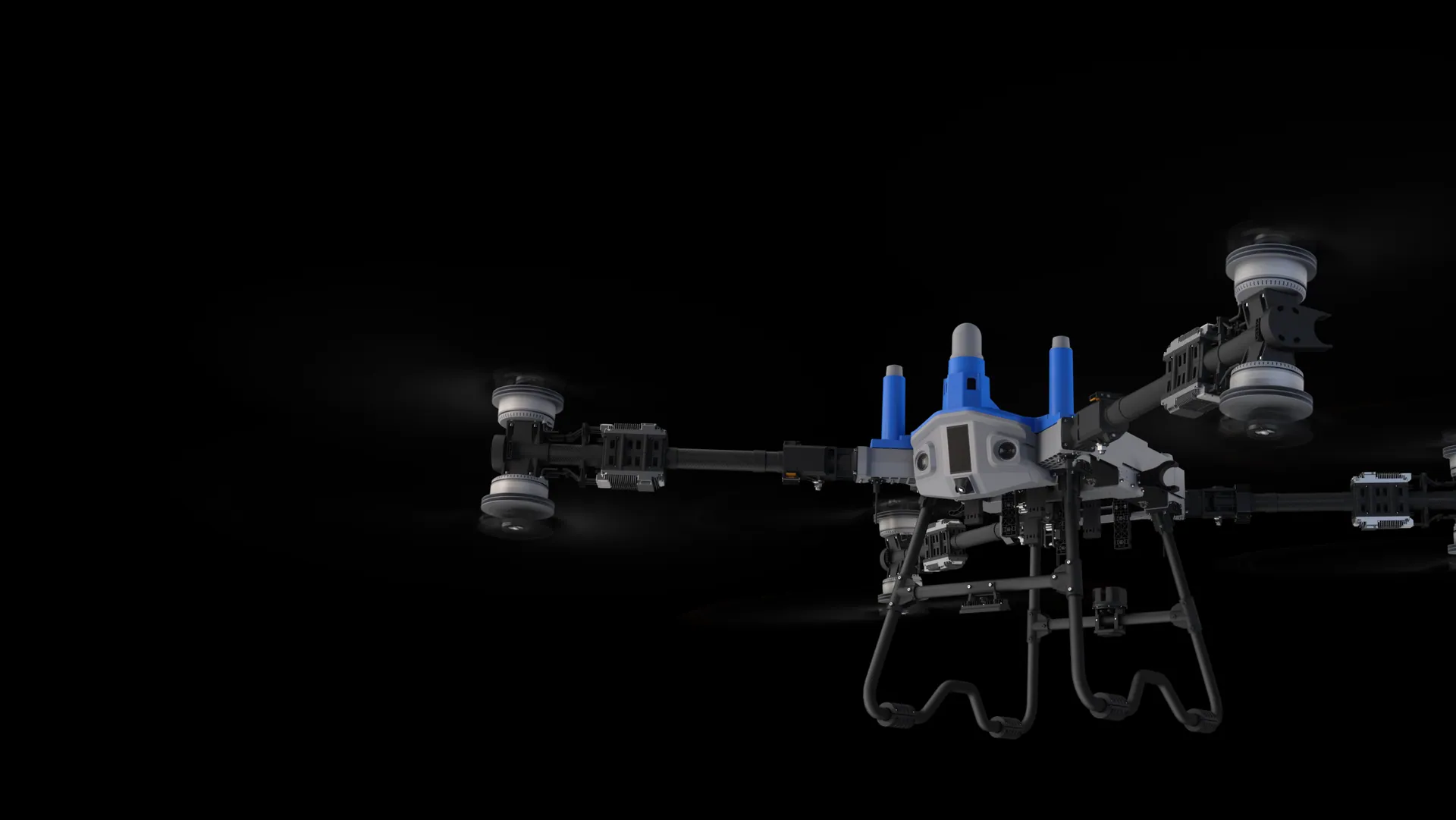
Extraordinary payload, exceptional intelligence
C500 Heavy-Lift Flying Robot
240 kg payload | End-to-end autonomous decisions | Cluster lifting
Manufactured by EAVision · Supplied worldwide by Partdro · Certification support
Meet the all-new EAVision C500, with up to 240 kg of payload on a single aircraft. A four-axis, eight-propeller layout delivers 720 kg of total thrust for outstanding stability and reliability, while dual- and quad-battery configurations switch flexibly with a 7-minute ultra-fast charge.
Nine-eye vision and multi-source radar fuse into an all-domain perception shield, and an end-to-end neural network paradigm redefines aerial logistics.
Automatic swing elimination across the full safety envelope. 30 km 4G+ video transmission. Multi-aircraft collaboration that pushes past the limits of payload.
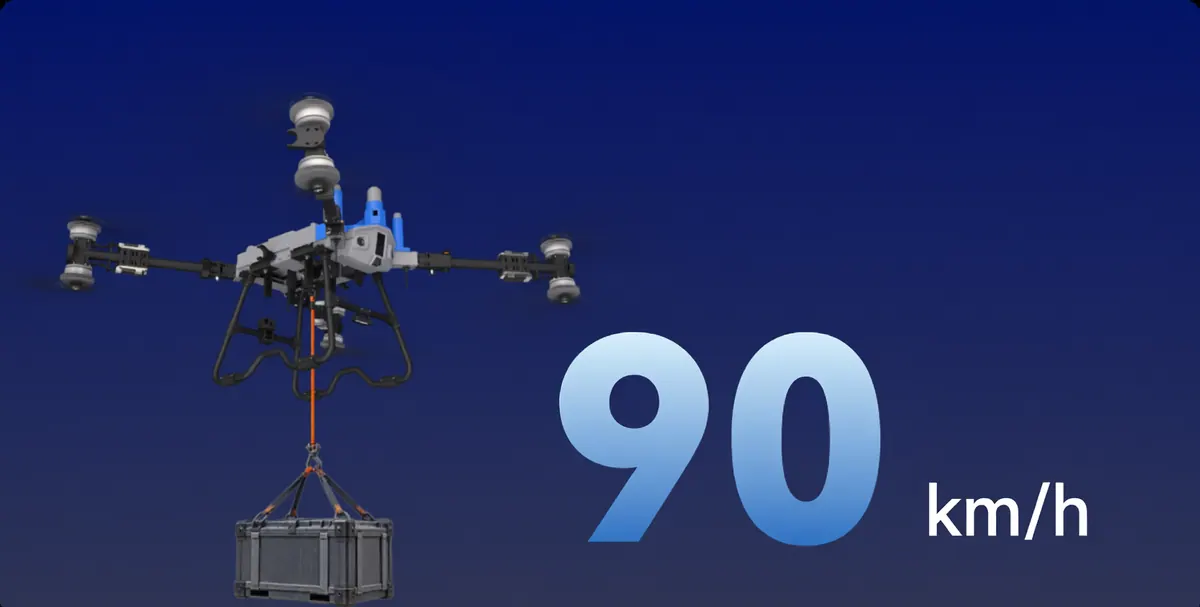
Max flight speed
Structurally stable
Front-rear integrated die-cast crossbeam
End-to-end all-domain perception
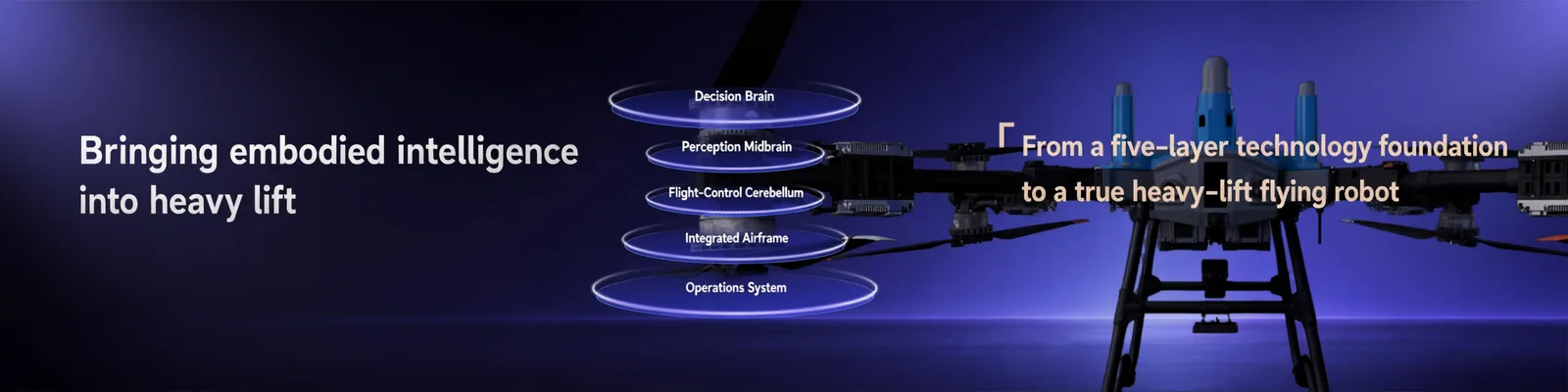
End-to-end neural network paradigm
Redefining aerial logistics
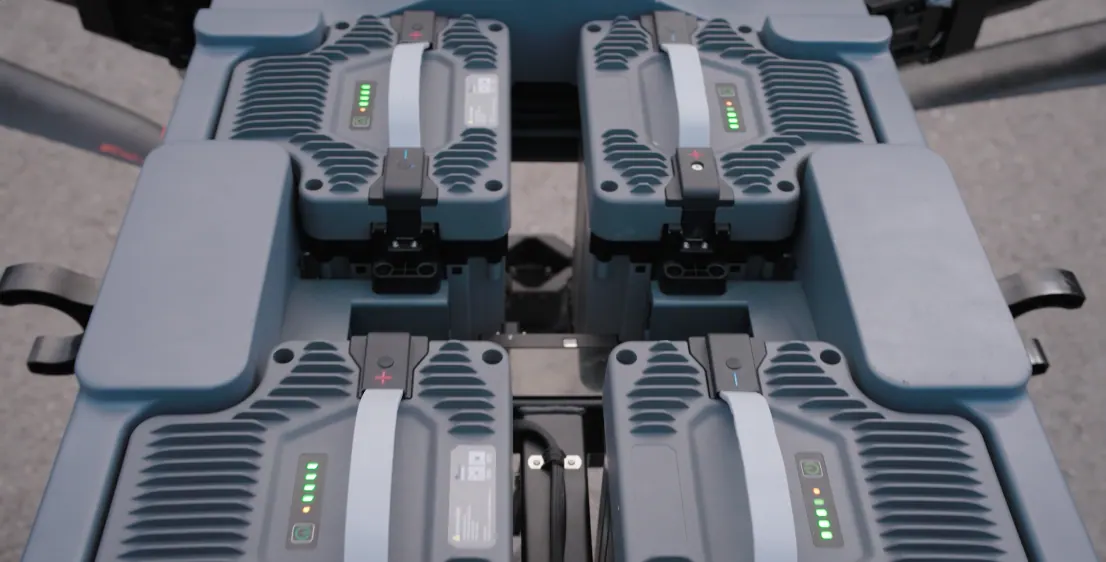
Dual / quad battery operation
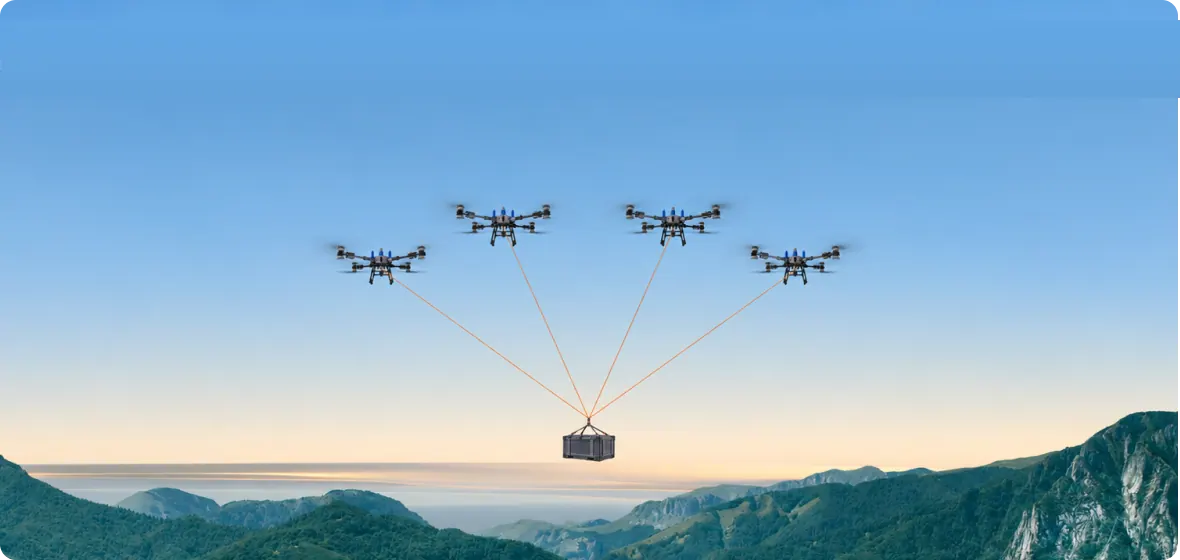
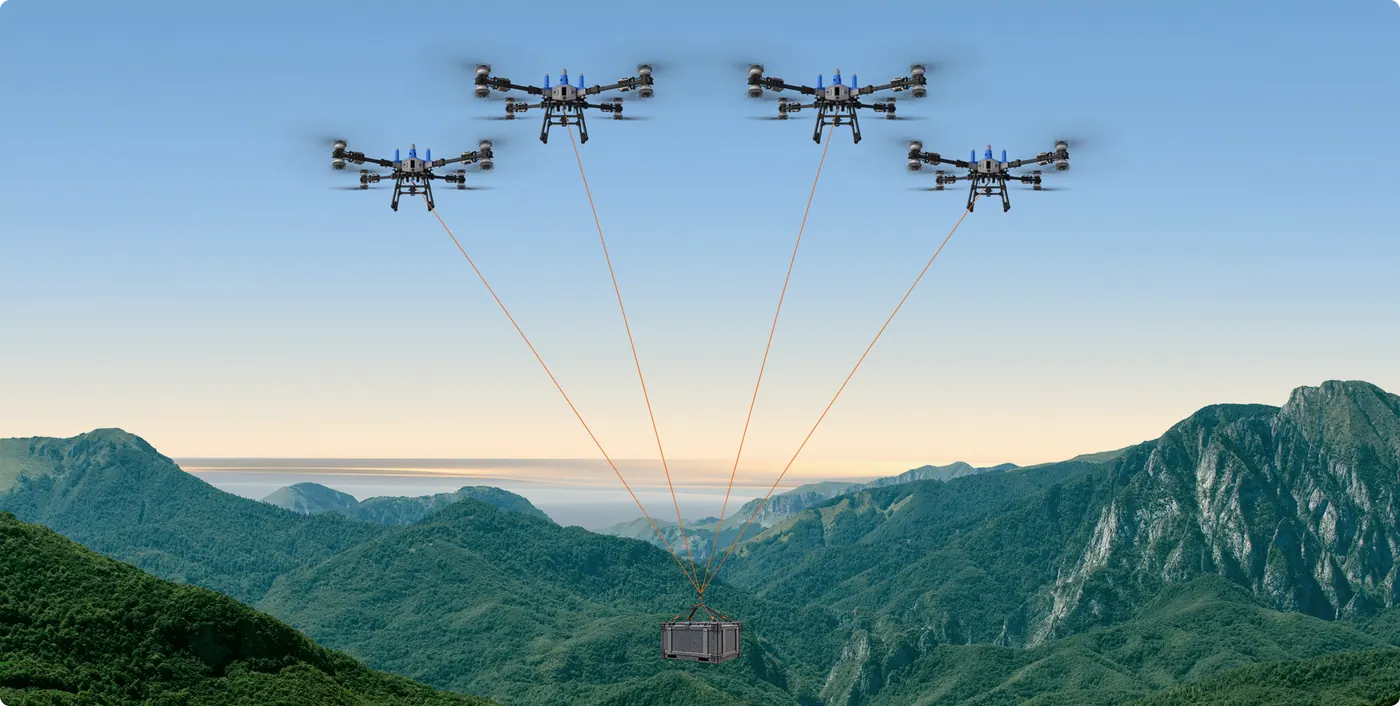
Multi-aircraft collaboration
Up to 720 kg payload
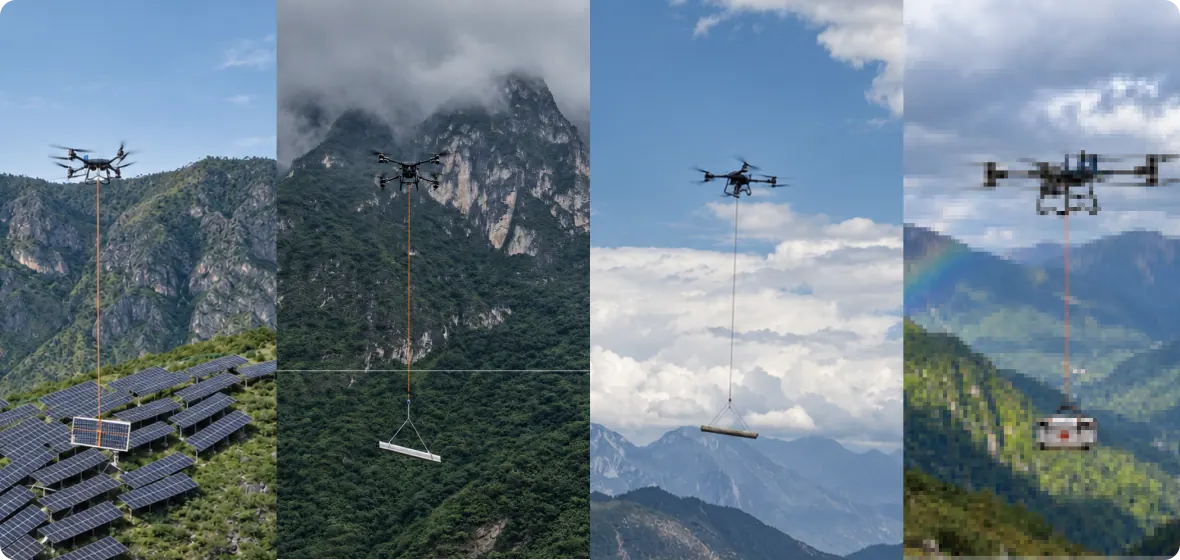
More applications, more possibilities
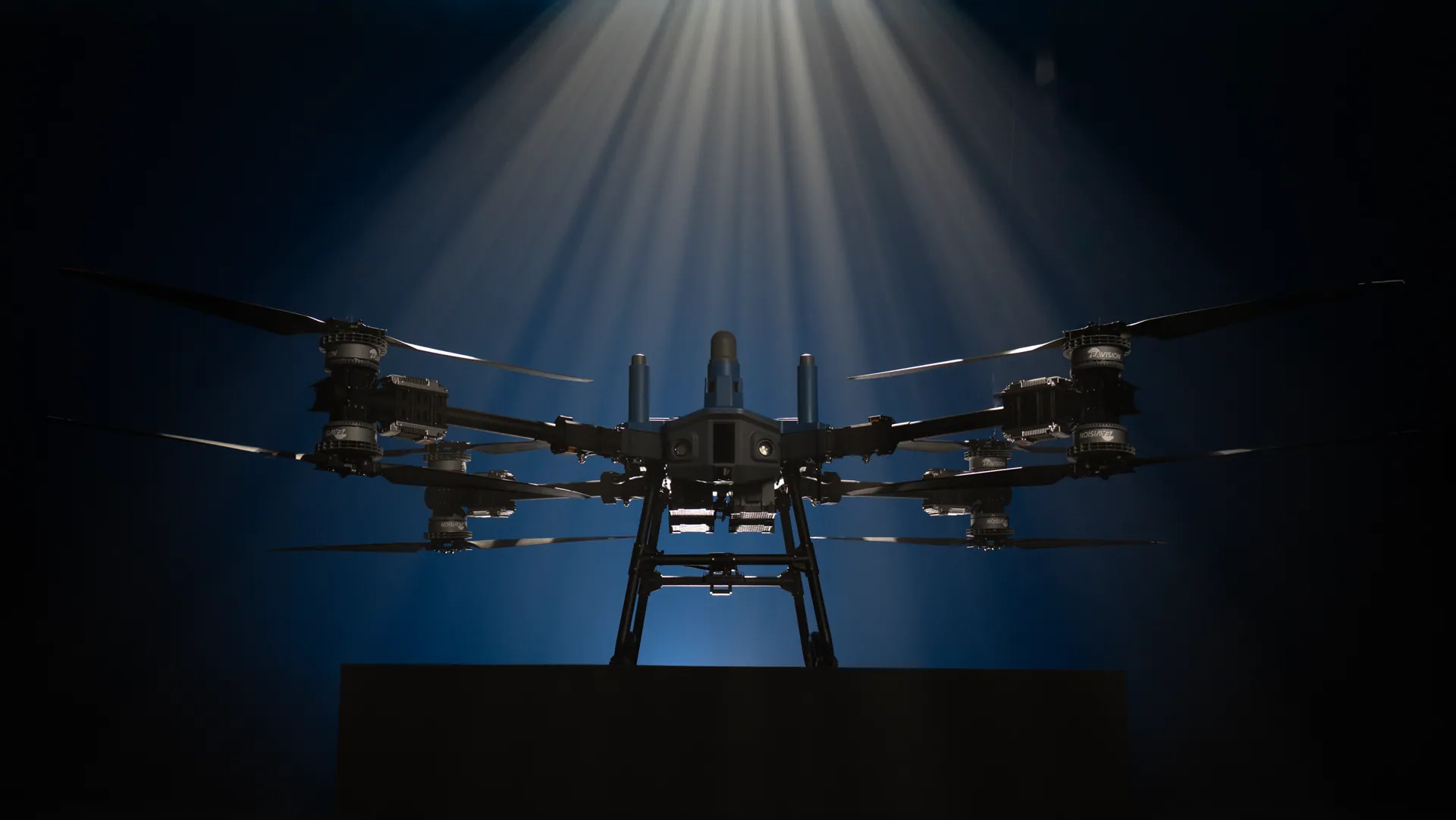
Energy Defines the Payload Frontier
50Ah CTB ultra-fast-charge battery: dual- and quad-battery operation; 5.5C fast charging: full charge in as little as 7 minutes[10]
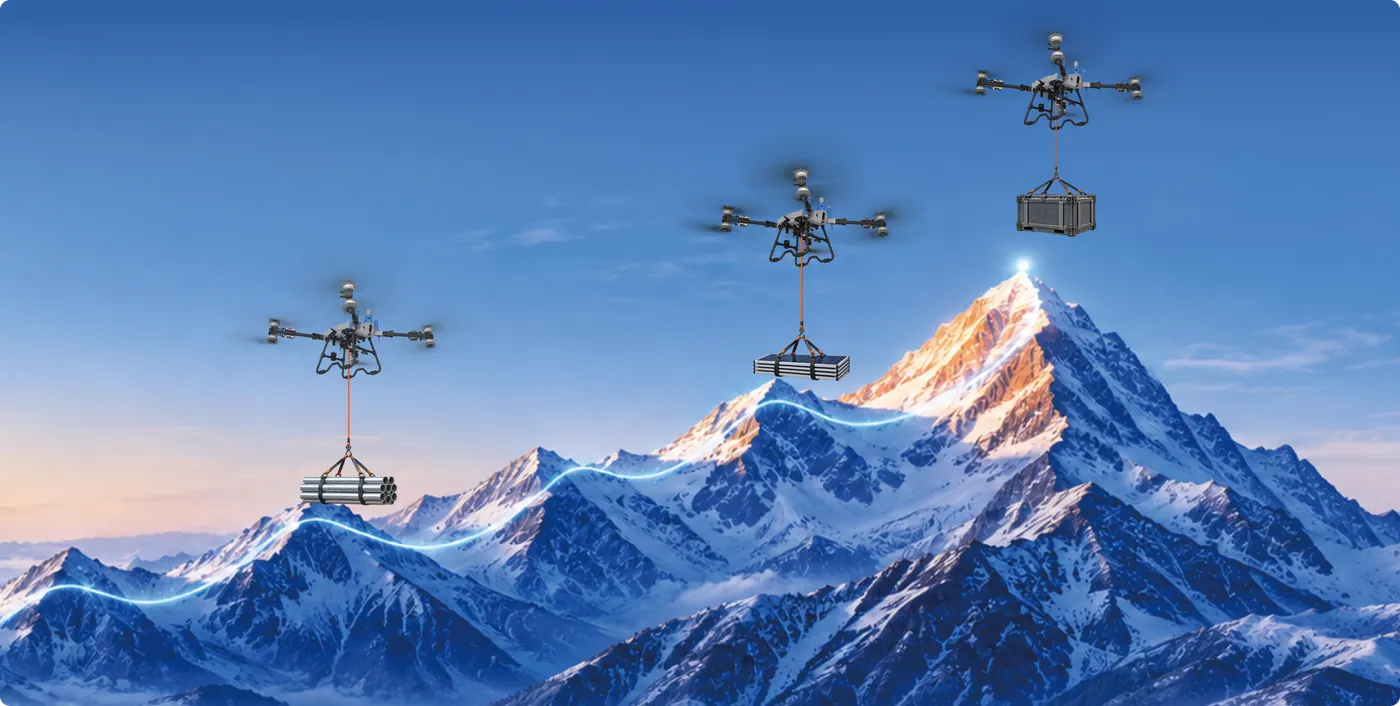
Perception Without Limits, Precision to the Millimeter
2× four-eye surround system + 4K FPV = nine-eye 360° real-time surround imagery, transmitted directly with no latency
End-to-End Autonomous Decisions, Redefining Aerial Logistics
Expert-trajectory imitation learning and learning agents | Flow Matching, world models, and reconstruction pre-training, with trillions of on-device operations per second
Cluster Lifting System, Beyond Heavy-Lift Limits
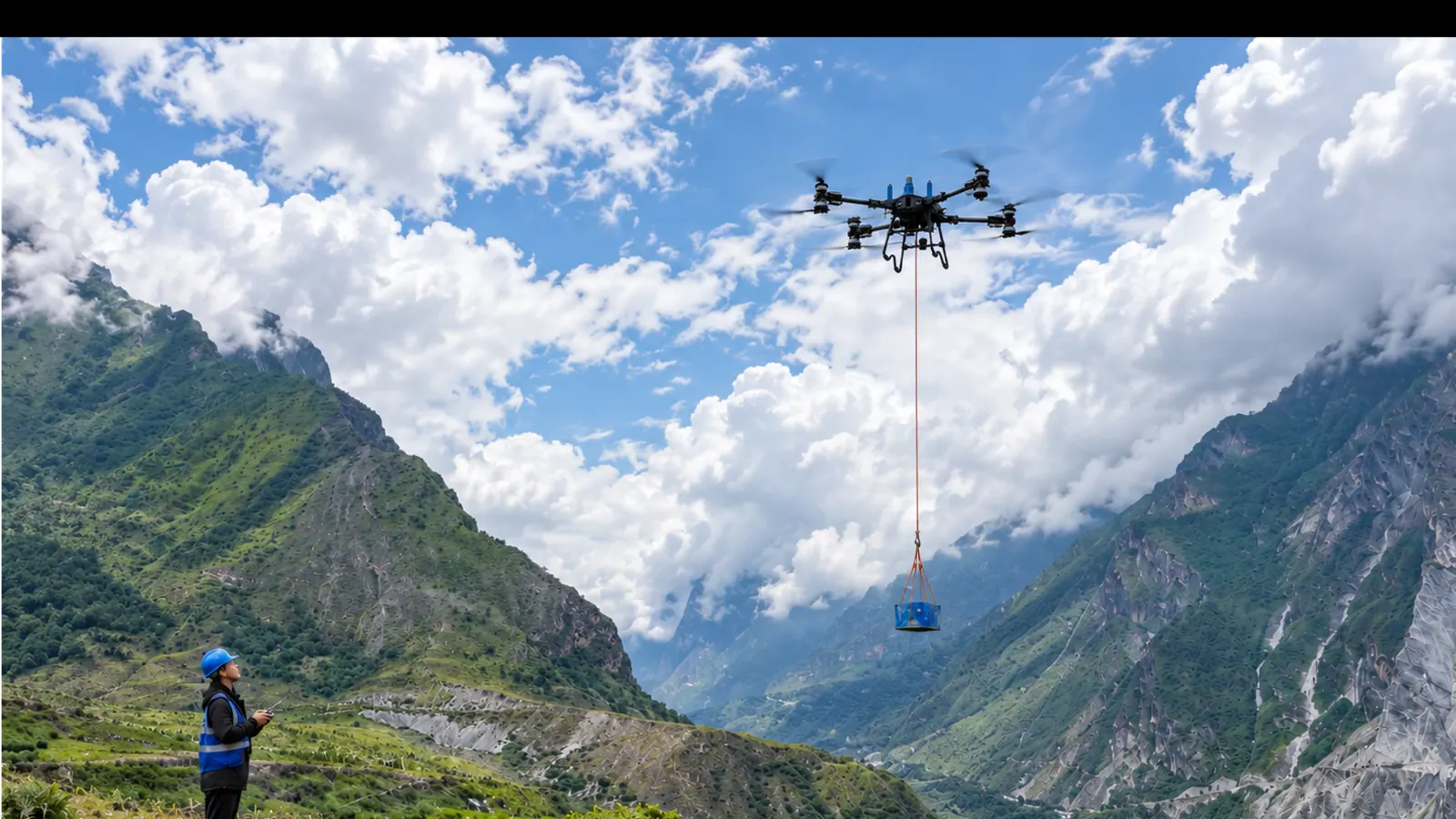
More Configurations, More Capabilities
Applications beyond this, capabilities beyond sight
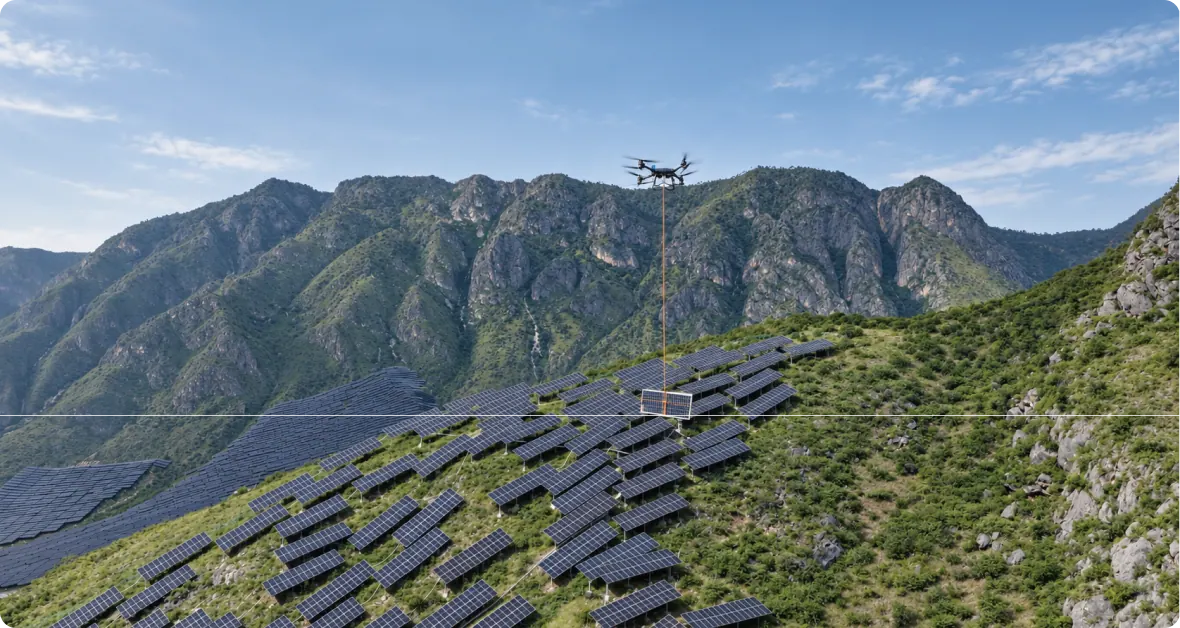
Solar panel transport
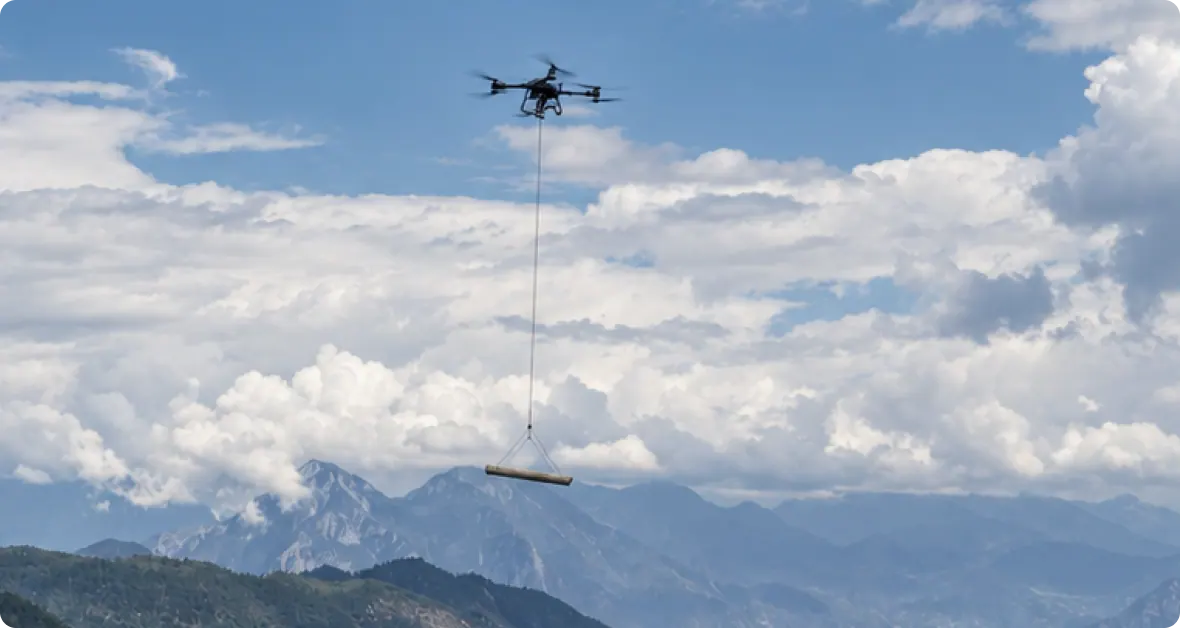
Timber transport
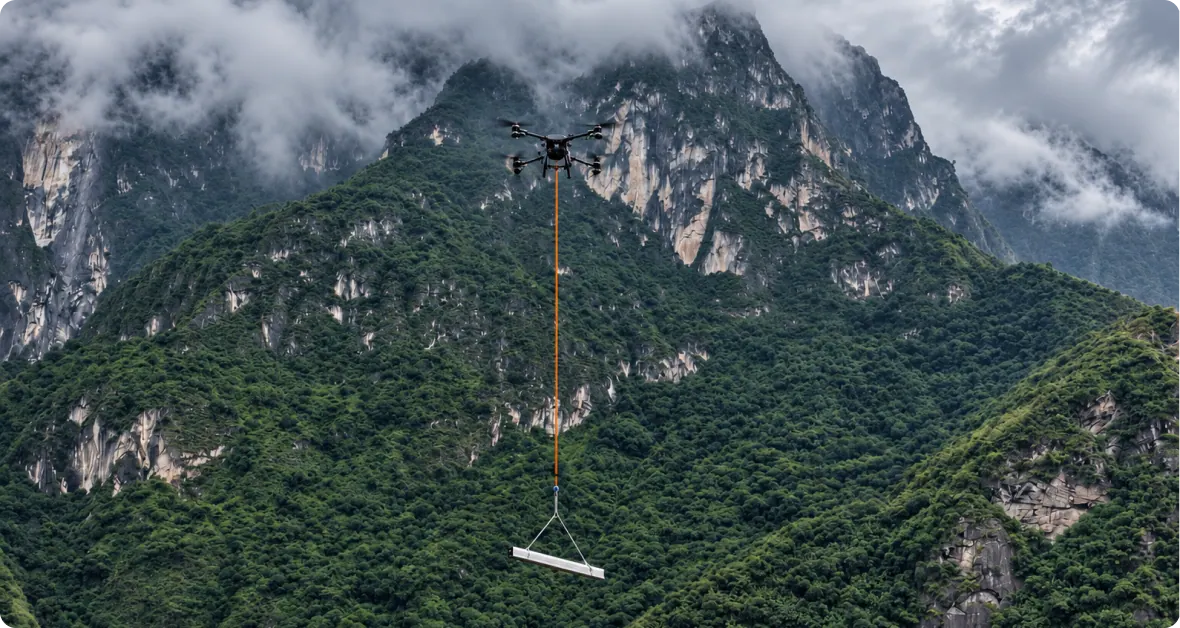
Steel transport
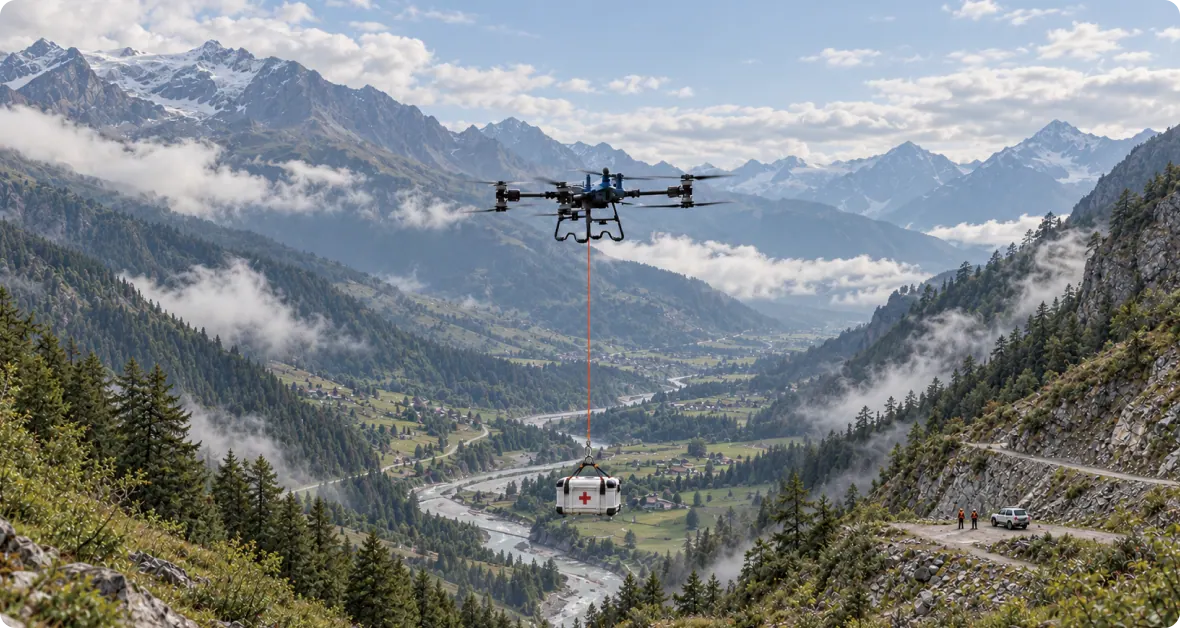
Emergency supply transport
EAVision C-500
Four factory configurations, each built around a different payload and charging setup.
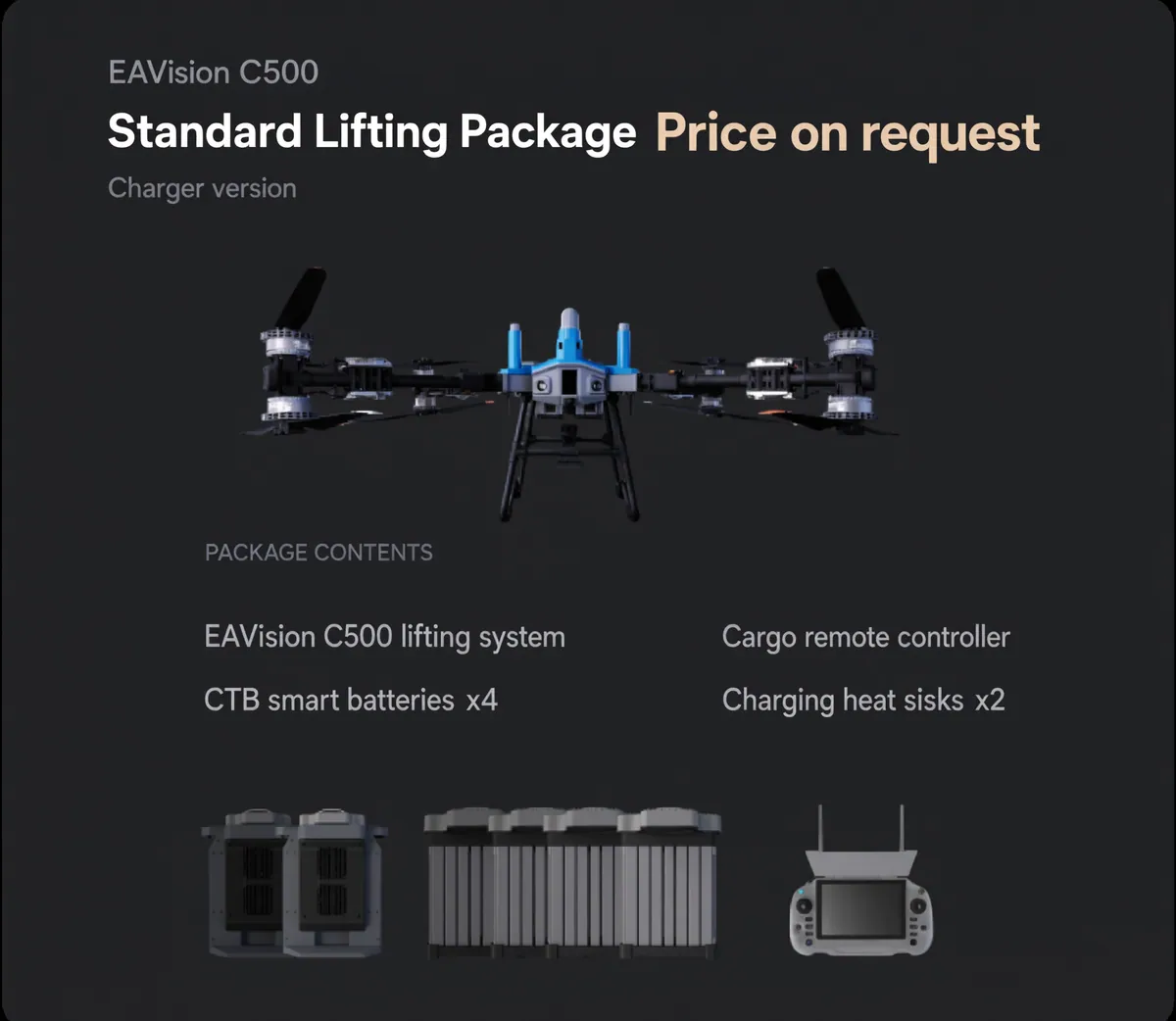
Standard Lifting Package
Charger version
EAVision C500 lifting system, 4× CTB smart batteries, cargo remote controller, 2× charging heat sinks.
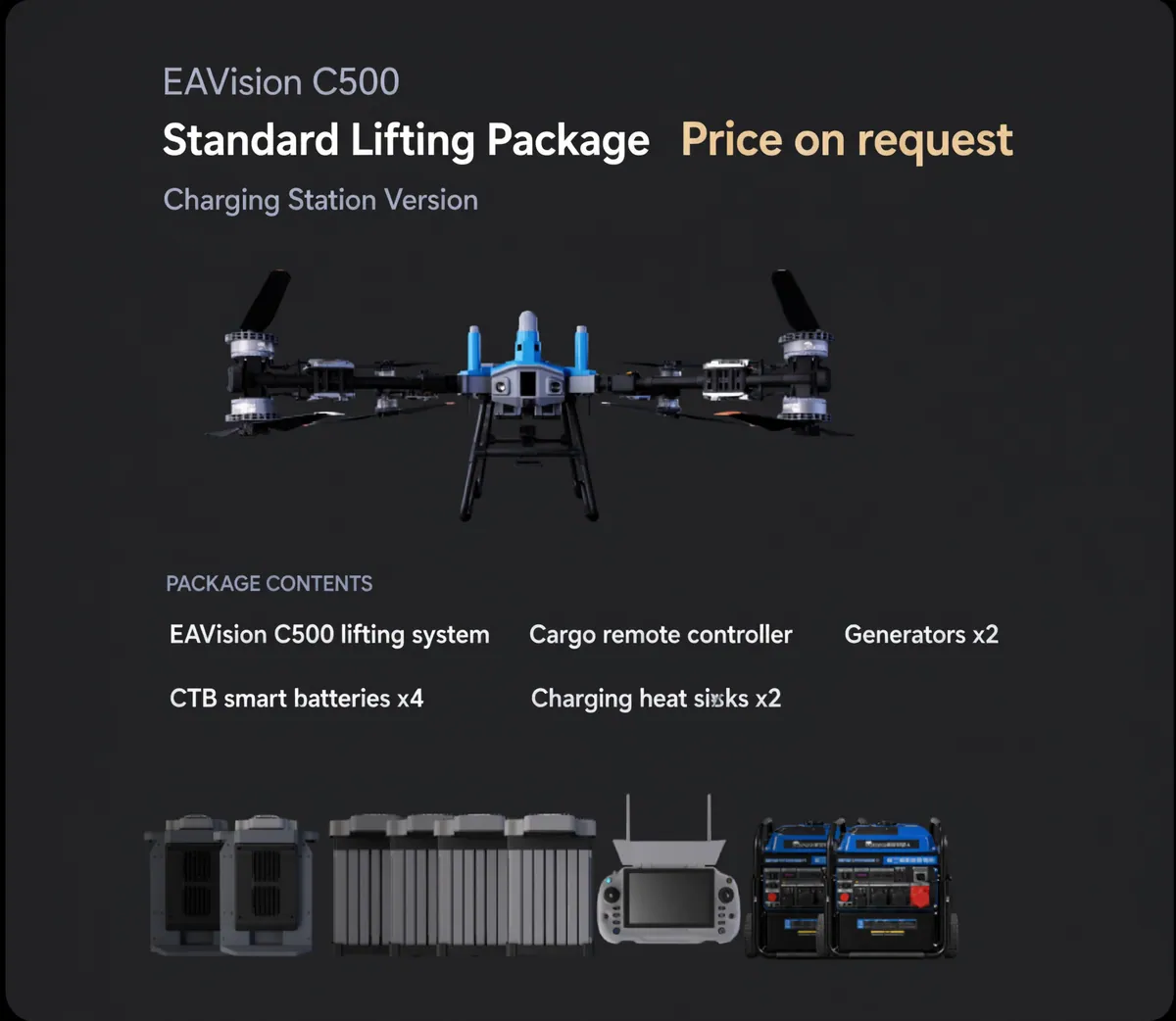
Standard Lifting Package
Charging station version
EAVision C500 lifting system, 4× CTB smart batteries, cargo remote controller, 2× charging heat sinks, 2× generators.
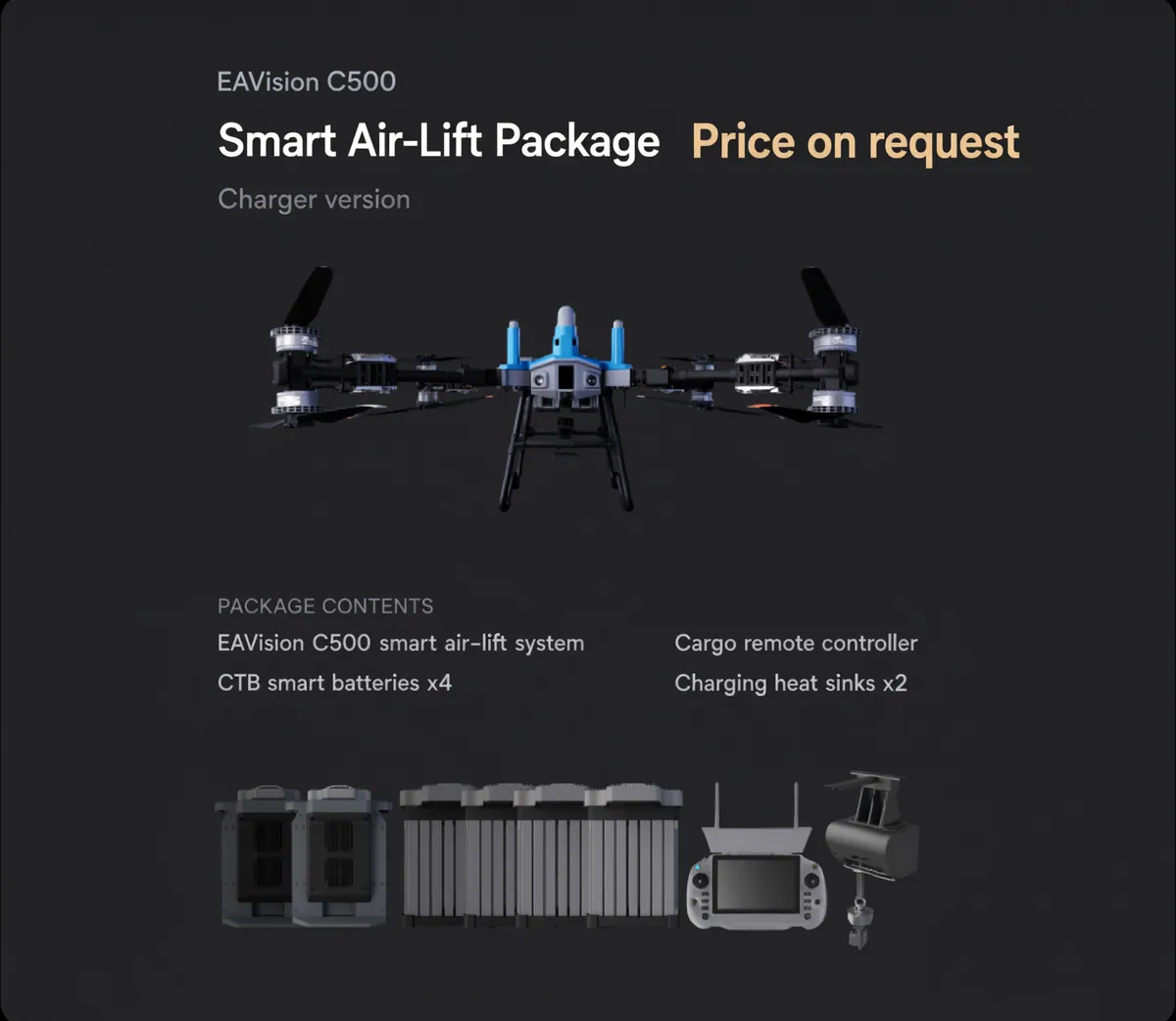
Smart Air-Lift Package
Charger version
EAVision C500 smart air-lift system, 4× CTB smart batteries, cargo remote controller, 2× charging heat sinks.
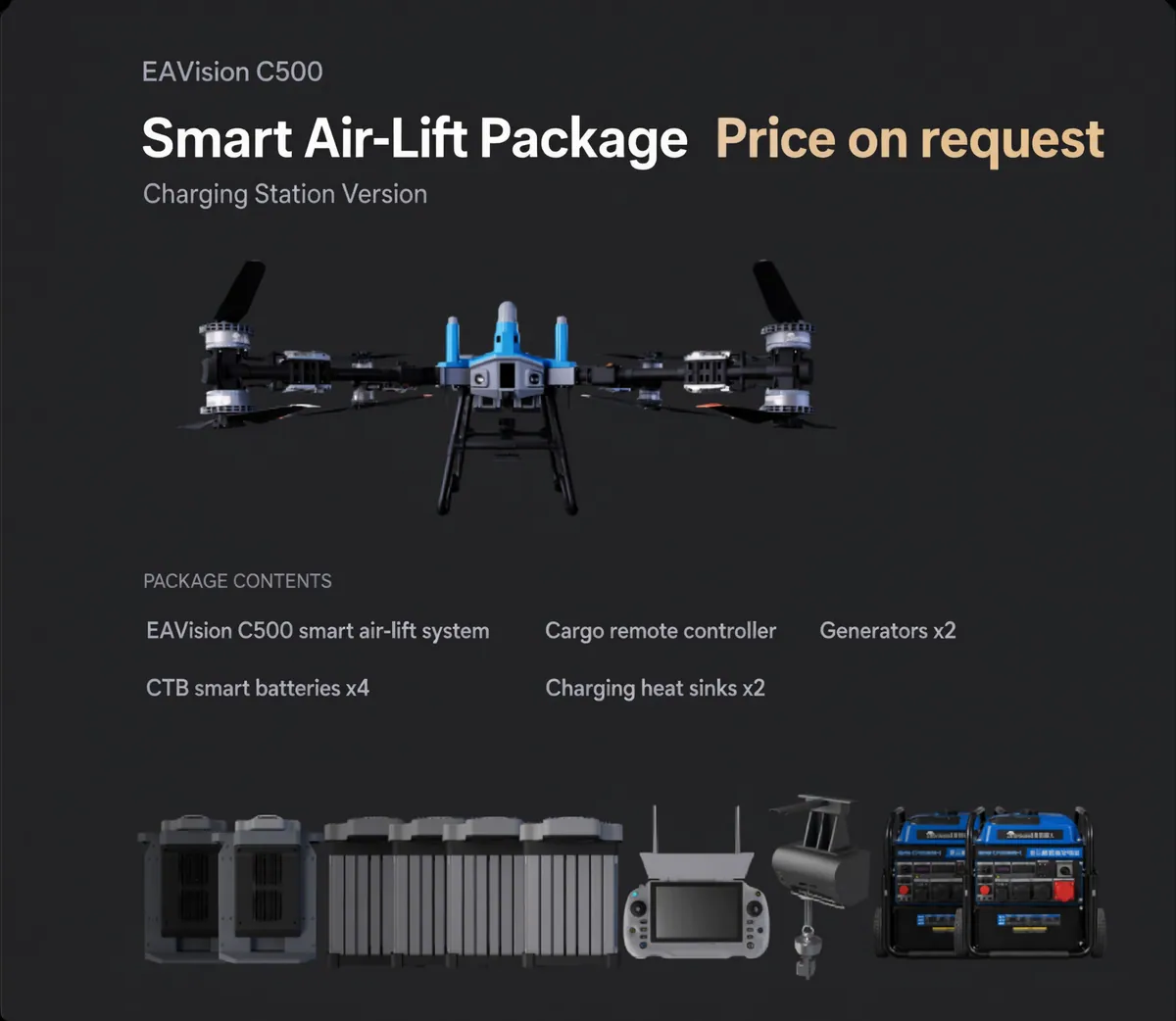
Smart Air-Lift Package
Charging station version
EAVision C500 smart air-lift system, 4× CTB smart batteries, cargo remote controller, 2× charging heat sinks, 2× generators.
Global pricing, tailored to you
Request a quote
C500 pricing depends on your configuration, region and deployment scale. Tell us what you need and our team will come back with a tailored offer.
- Configuration matched to your payload and charging setup
- Regional pricing and delivery lead times
- Support with certification and after-sales planning
C-500 Heavy-Lift Flying Robot Specifications
| Max payload | 240 kg |
|---|---|
| Empty weight (excluding batteries) | 120 kg |
| Power configuration | Four axes, eight propellers, dual power safety redundancy |
| Propellers | 73-inch carbon-fiber folding propellers |
| Total thrust (four axes) | 720 kg |
| Max flight speed | 90 km/h |
| Wind resistance | Beaufort 6 |
| Ingress protection | IP55 |
| Operating temperature | -20°C to 50°C |
| Battery configuration | 50Ah CTB ultra-fast-charge battery, dual- and quad-battery operation |
| Charging | 5.5C fast charging, full charge in as little as 7 minutes |
| Range | Max flight distance 35 km |
| Perception system | Nine-eye vision (2× four-eye surround + 4K FPV), 920,000-point-cloud LiDAR, millimeter-wave radar above and below |
| Detection range | 150 m |
| Video transmission | 4G+ video transmission up to 30 km |
| Cluster lifting | Up to 400 kg with two aircraft, up to 720 kg with four |
* Please check, confirm, and strictly comply with local laws and regulations before flying.
** All videos and images on this page were captured in strict compliance with applicable local laws and regulations. Please familiarize yourself with local laws and regulations and ensure the aircraft has the required certifications before flying.
*** Product appearance is subject to the actual shipped unit.
**** Payload figures are measured at sea level. The app intelligently evaluates loading safety based on current aircraft status, battery status, and environmental conditions. Please load according to the weight status shown in the app; otherwise flight safety may be affected.
1. Measured with the C500 in a quad-battery, unloaded configuration fitted with the lifting system, flying forward at 20 m/s at equivalent sea-level altitude, 25°C ambient temperature, and in windless conditions until the battery was depleted and a forced landing occurred. Data is for reference only; results may vary under different external environments, usage methods, and firmware versions. Please pay attention to app prompts during actual flights.
2. The 30 km transmission distance is achieved only under the FCC standard. In mainland China, where the SRRC standard applies, the maximum video transmission distance is 20 km. The above data was measured outdoors in open, interference-free conditions and represents the maximum one-way, no-return communication distance under each standard. Please pay attention to return-to-home prompts in the app during actual flights.
3. Derived from comparisons with conventional cargo drones; conclusions may vary under different test conditions.
4. Maximum flight speed depends on the number of batteries and payload weight. Please fly safely in strict accordance with app prompts and warnings.
5. Payload capacity decreases as takeoff altitude increases. 6,000 m is the maximum safe flight altitude for the aircraft (with takeoff at 4,500 m).
6. Requires an additional optional purchase.
7. This feature will be supported through a future firmware upgrade. Please watch for the relevant firmware update notes on the remote controller and the official website.
8. The effective perception range and the obstacle avoidance and bypass capabilities vary with ambient light, rain and fog, and the material, position, and shape of target objects. Downward perception assists terrain-following altitude hold, while perception in other directions is used for obstacle avoidance. Except in scenarios with linear obstacles, if obstacle avoidance fails at speeds of 13.8 m/s or below and damages the aircraft, liability can be determined through log analysis, and repairs are free of charge if the cause is not human error. In scenarios with linear obstacles, the corresponding speed is 10 m/s or below. For operational safety, power lines, guy wires, and similar hazards are recommended to be marked as obstacles.
Note:
(1) Downward perception assists terrain-following altitude hold. Users should watch the flight environment; damage caused by colliding with obstacles below is not covered by the free warranty;
(2) The aircraft cannot actively avoid moving objects. Users should watch the flight environment; damage caused in such scenarios is not covered by the free warranty;
(3) Cargo obstacle avoidance is an assistive function only. Users should watch the flight environment; damage caused by the cargo or lifting rope colliding with obstacles is not covered by the free warranty;
9. The second remote controller is optional and requires an additional purchase.
10. Measured at equivalent sea-level altitude, 15–40°C ambient temperature, with single-battery sequential charging, from 30% to 95% charge. Fast charging is supported when the battery cell temperature is between 15°C and 70°C. Charging time varies with input power, altitude, starting charge level, and other factors.